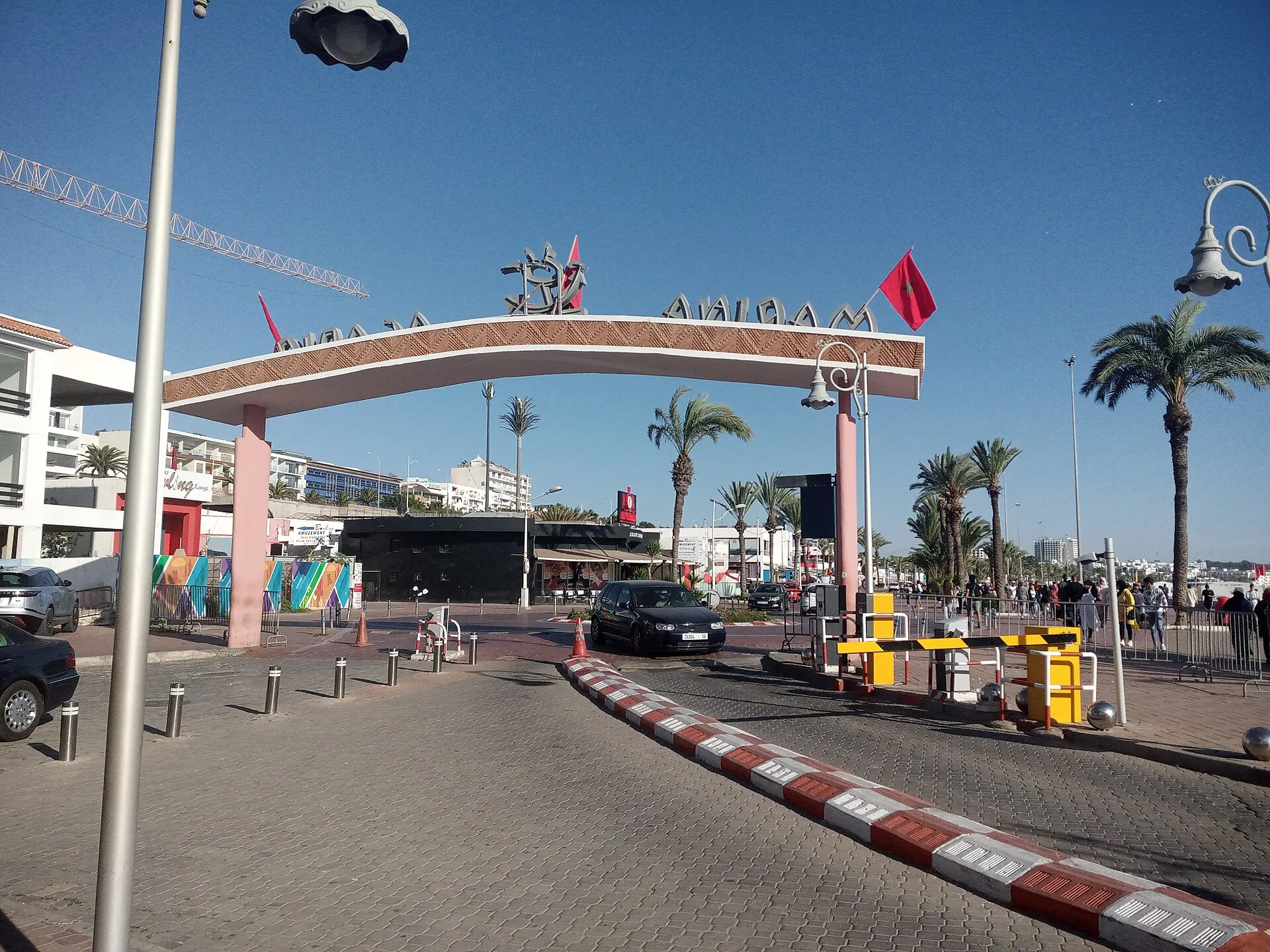
Agadir’s beach is the headline, but treat the city as a base and there’s easily a week of things to do. The rebuilt centre is short on historic sights, that’s the legacy of the 1960 earthquake, so the real pleasures are the long seafront, a sprawling market, a hilltop fort with new cable-car access, and the wild country a short drive out. Here’s the honest rundown, roughly in the order most people get to them.
The beach & promenade
The six-kilometre crescent of sand is the reason Agadir exists as a resort. It shelves gently, the water’s clean, and the paved promenade behind it runs the length of the bay past cafés, beach clubs and the resort hotels. Mornings are calm; afternoons bring an Atlantic breeze that’s welcome in summer and brisk in winter. Camel rides, jet skis and beach-football pickup games are all part of the scene. It’s genuinely good for a swim, just note the sea is cooler than the Mediterranean year-round.
The marina
At the northern end of the beach, the marina is the newer, tidier face of Agadir, whitewashed buildings, moored yachts, and a strip of restaurants that’s best at sunset. It’s a pleasant evening stroll and a reliable spot for grilled fish, though prices run higher than the back streets. Don’t expect old-Morocco atmosphere here; expect a clean, easy waterfront.
Souk El Had
This is the one unmissable “real Morocco” experience in the city. Souk El Had is one of the largest markets in the country, thousands of stalls behind walls and gates, divided loosely into sections for spices, argan oil, olives, produce, clothes, ceramics and household bits. Go in the morning, haggle without heat, and keep valuables zipped away in the busy aisles. It’s closed on Mondays. Even if you buy nothing, it’s the most alive corner of Agadir.
Kasbah & the cable car
On the hill above the city sit the ruins of Agadir Oufella, the old Kasbah, with the famous Arabic hillside inscription, “God, Country, King”, lit up at night. The fort itself is largely ruins, levelled in the earthquake, but the view over the bay is the best in town. The new cable car (téléphérique) gets you up in a few scenic minutes and saves the climb, with a small viewing area at the top. It’s a short visit, pair it with the beach or the souk rather than building a half-day around it.
Paradise Valley
An hour northeast, on the road towards Imouzzer, Paradise Valley is a palm-lined gorge with natural rock pools good for swimming and cliff-jumping. It’s the classic Agadir half-day escape, go early to beat the crowds and the heat, and aim for spring or after rain when the pools are full (high summer can leave them low). Most people come by guided tour, rental car or hired driver; there’s no useful public transport.
Crocoparc
A few kilometres out on the Marrakech road, Crocoparc is a landscaped park built around a few hundred Nile crocodiles, with botanical gardens and shaded walkways. It’s squarely a family half-day, easy, well-kept and a hit with younger kids, rather than a must-see for everyone. If you’re travelling without children, you can comfortably skip it.
Day trips from Agadir
The best of Agadir is often a drive away. Taghazout and the surf coast are 40 minutes north, even non-surfers enjoy the laid-back café scene; start with the Taghazout surfing guide. Taroudant, the walled “little Marrakech”, is a relaxed full day inland. Essaouira’s blue-and-white port is a longer run up the coast. For where to base yourself between adventures, see where to stay in Agadir, and for the bigger picture read the Agadir travel guide.