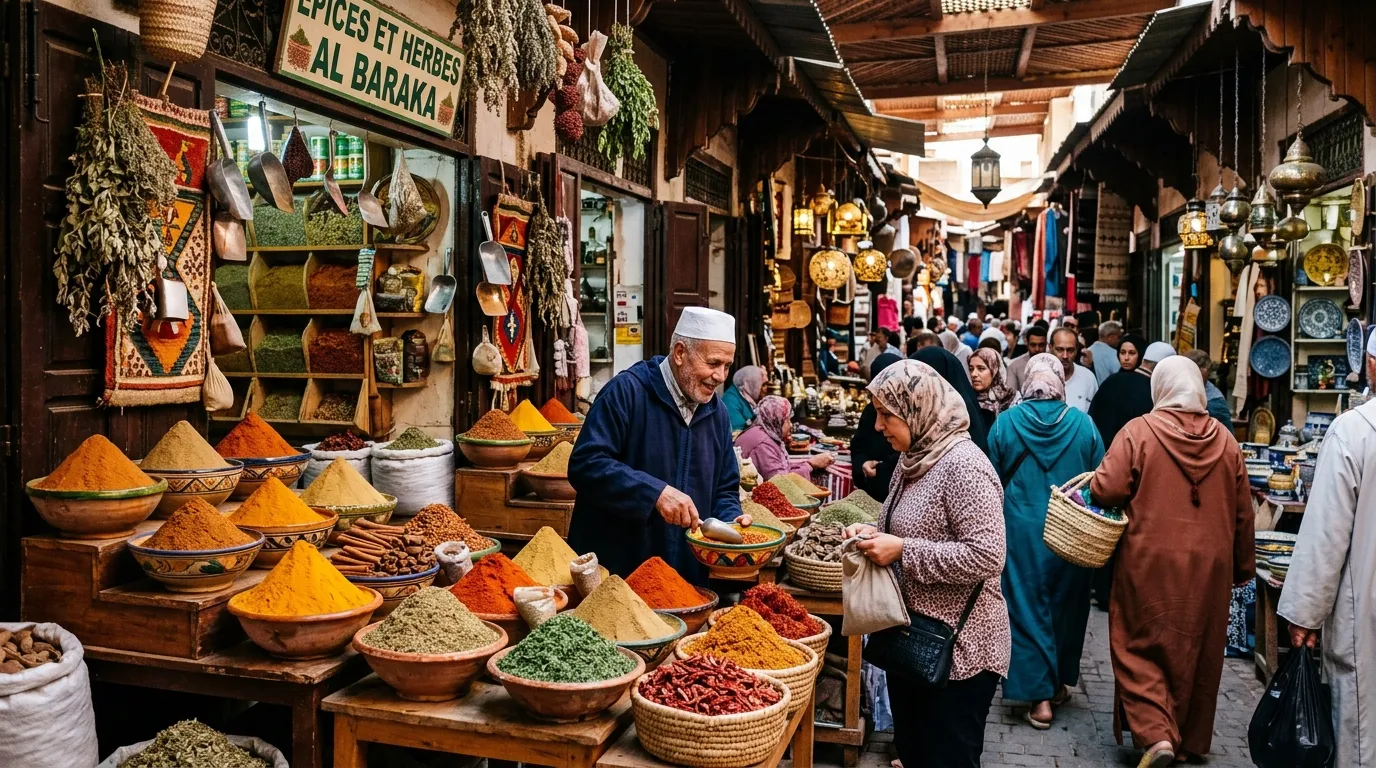
Agadir has no ancient medina, the 1960 earthquake saw to that, so Souk El Had is where the city's real, unscripted life happens. It is one of the largest urban markets in Morocco: a walled enclosure of around 13 hectares packed with thousands of stalls, organised into sections and entered through numbered gates. This is not a tourist bazaar dressed up for photos; it is where Agadiris actually buy their vegetables, spices, clothes and pottery. That is exactly why it is worth an hour or two, and why a little know-how helps.
What Souk El Had is
Picture a small walled town given over entirely to commerce. Inside the walls, the market is divided into themed quarters, mountains of produce, pyramids of spices and olives, leather and pottery, fabrics and clothing, household goods and souvenirs. It is busy, loud and entirely functional, and that authenticity is the draw. Come curious rather than on a strict shopping mission and you will enjoy it most.
Opening days and times
The single most important thing: Souk El Had is closed on Mondays. Plan around it. It is open the rest of the week from roughly mid-morning into the evening, and it is fullest and liveliest at the weekend, when the greatest number of traders set up. For a calmer visit go on a weekday mid-morning; for the full spectacle, come at the weekend and accept the crowds.
The gates and sections
The market is ringed by a wall with numbered gates (portes), there are well over a dozen, and they are your map. Each opens onto roughly the same neighbourhood every time, so it pays to note which gate you came in by and to pick a landmark gate to leave from. Inside, the themed sections make it navigable once you accept you will get a little lost. Getting lost is part of it; just keep a gate number in mind to find your way out.
What to buy
- Spices and dried goods, saffron, ras el hanout, dates, olives and preserved lemons, sold by weight.
- Argan oil. Agadir is in the heart of argan country; buy the culinary or cosmetic version here, but taste/check before you pay.
- Crafts, leather, pottery, woven baskets, lanterns and Berber rugs.
- Clothing and fabric, djellabas, scarves and cheap everyday wear in the clothing quarter.
How to haggle
In the craft, souvenir and clothing sections prices are not fixed, and the opening quote is usually well above the real price. The rhythm is simple: smile, show interest, counter at roughly a third to a half of the first figure, and settle somewhere in the middle if you both want the deal. Keep it light and good-humoured, be ready to walk away (which often brings a better price), and never feel pressured. Food in the produce sections is more standard-priced, so save the negotiating energy for the crafts.
Staying safe and savvy
It is a friendly, working market, not a danger zone, but it is crowded, so the usual rules apply: keep your bag zipped and in front of you, carry small notes so you are not flashing a fat wallet, and keep your phone tucked away. Carry cash, as almost no stall takes cards. Go gently on the photos in the food sections, ask first, and you will be welcomed. For more on the city beyond the market, see things to do in Agadir.